

As Europe accelerates its shift to electric vehicles (EVs), securing a reliable supply of battery-quality lithium has become critical. And ASX-listed Vulcan Energy Resources is positioning itself at the centre of that effort.
“The integrated supply chain winners are the ones that are probably going to be leading the pack in the next five to 10 years,” Vulcan Energy managing director and chief executive officer (CEO) Cris Moreno told Australian Mining.
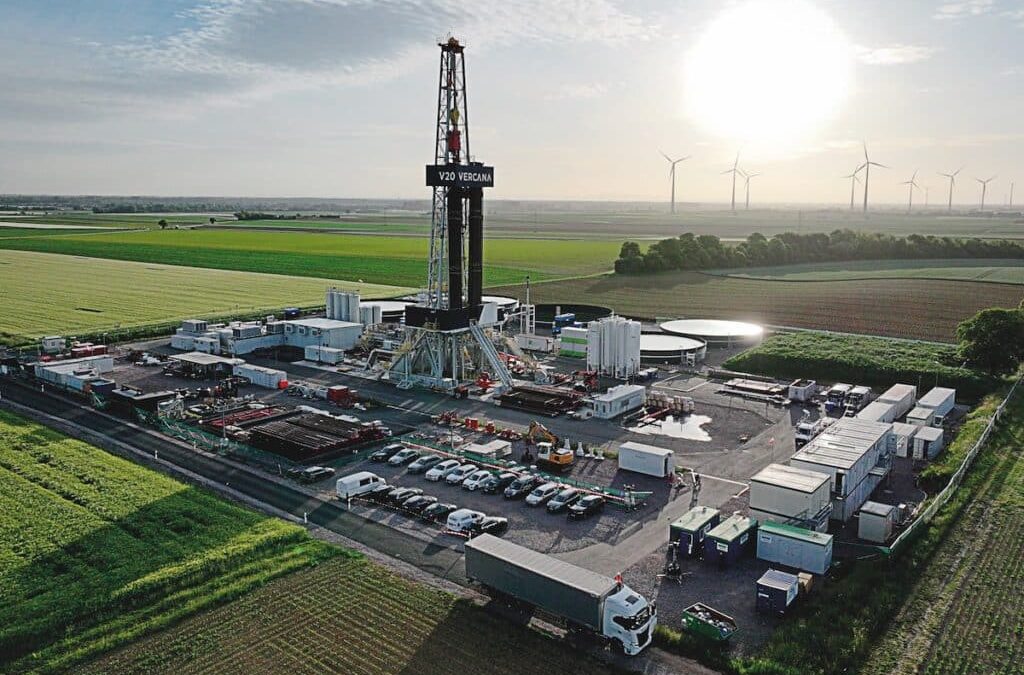
For Vulcan, this means overseeing every stage of production – from lithium extraction to refining – within a 100km radius of its Lionheart project in Germany’s Upper Rhine Valley. The company relies on proprietary direct lithium extraction technology powered by geothermal energy.

“By producing battery-grade lithium locally, Vulcan avoids long, carbon-intensive supply chains, which sets us apart from hard-rock producers that transport material thousands of kilometres for processing,” Moreno said.
While lithium is a relatively small global minerals player compared with commodities such as copper or iron ore, its growth is exceptional.
“In 2024 we produced one million tonnes globally, and this year we’ve produced 1.4 million,” Moreno said. “Not many industries are growing at 40 per cent compound growth.”
Moreno believes years of under-investment during low-price cycles have left the market exposed.
“This makes Vulcan’s Lionheart project, which is targeting 24,000 tonnes of lithium hydroxide annually – enough for roughly half a million electric vehicles – particularly significant.”
Vulcan holds 17 licences along the Upper Rhine Valley but will initially use only two.
“It’s on us to start building out phase two and phase three every two to three years,” Moreno said.
“We will take lessons from phase one and apply them to future phases, continually improving capital efficiency.”
By scaling production in stages, Vulcan can match European demand while refining its processes. The project has attracted strong support on the continent.
With nearly €204 million ($332.4 million) in public grants and €150 million ($244.5 million) in equity, Vulcan has secured backing to the tune of more than half a billion dollars.
“That’s a clear signal about our criticality to the future of that state and continent,” Moreno said.
“If you go all the way downstream to where the automaker is, they’re at real risk of de-industrialising. The lifeline in the heart of that country is the automotive industry.”
“If Vulcan couldn’t demonstrate cost efficiency, we wouldn’t even get to the starting line,” Moreno said.
Sustainability and a fully integrated supply chain, Moreno said, give Vulcan a clear advantage. Strategic partnerships also play a key role.
“Our collaboration with German industrial group BSF is to work with them to create a development to help decarbonise their energy side, and then we will keep the rights to the lithium side,” Moreno said.
Additional capital will be required for future phases, but Vulcan expects flexibility in sourcing it from investors and strategic partners.
“We want to demonstrate that we can build this safely, on time and on budget and then start selling,” he said.
With a growth strategy, integrated low-carbon supply chain, and strong backing, Vulcan is positioning itself as a linchpin for lithium in Europe, underpinning the continent’s EV ambitions.