


In modern mining, the pursuit of digital transformation has become something of a holy grail for many operators.
From autonomous haulage and smart fleet management systems to real-time monitoring and data-driven decision-making, operations have invested heavily in technology to drive productivity and efficiency.
But beneath this growing digital ecosystem lies a less visible, often overlooked, foundation: the network.
Without a stable, transparent and well-understood network, even the most advanced systems and smartest devices can fall short of expectations.
Machine Logic is tackling this challenge with its Asset Monitoring Tool (AMT), a software-based solution designed to make operational technology (OT) visible, accessible and actionable. Built in Microsoft Azure and deployable on local servers, the platform provides real-time visibility across network-connected systems while prioritising simplicity and usability.
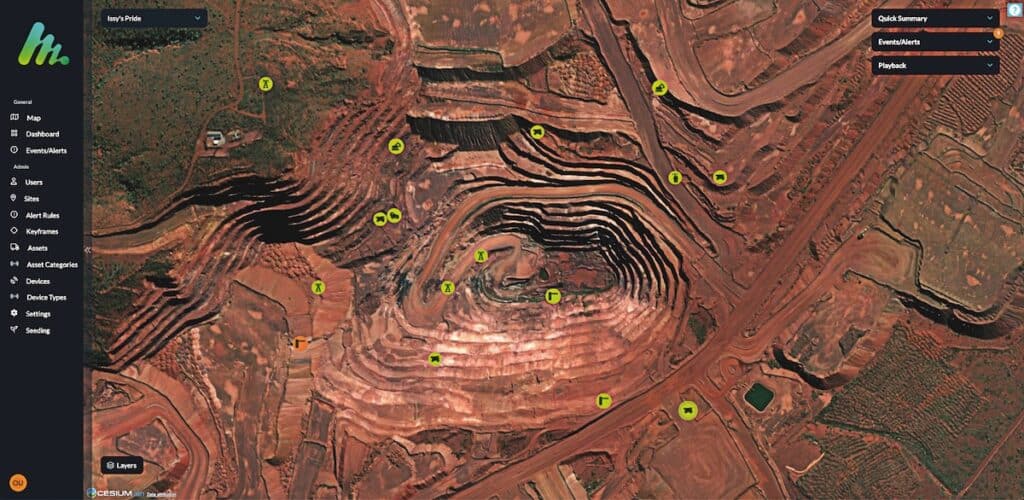
The origins of AMT lie in a lack of network visibility, which has been a persistent industry-wide challenge.
Machine Logic co-founder Aaron Innis, who has a background in autonomous mining, saw this gap repeatedly in the field. When AMT was recently deployed at a client site in Queensland, the results were immediate.
“It was pretty exciting,” Innis told Australian Mining. “We deployed the app on the customer’s server and integrated a few devices, and instantly we started to see issues, largely around the main access point where all the devices connect.
“That was what we call ‘flapping’ – it was on and off, causing network issues across the whole system. We picked it up almost instantly, mapped it and took it back to the customer, and they were blown away that we identified it so early.”
“Once we visualised it for the leadership team, they were surprised at how many issues existed,” Innis said. “It validated early on that the application was delivering value straight away.”
Network performance has effectively been a blind spot in many operations. Innis said some sites lack the on-ground support needed to properly investigate network behaviour, leaving issues unresolved and often misdiagnosed.
From his experience, these challenges are widespread across the industry. Many operations face similar conditions: networks that appear functional on the surface but contain underlying inefficiencies.
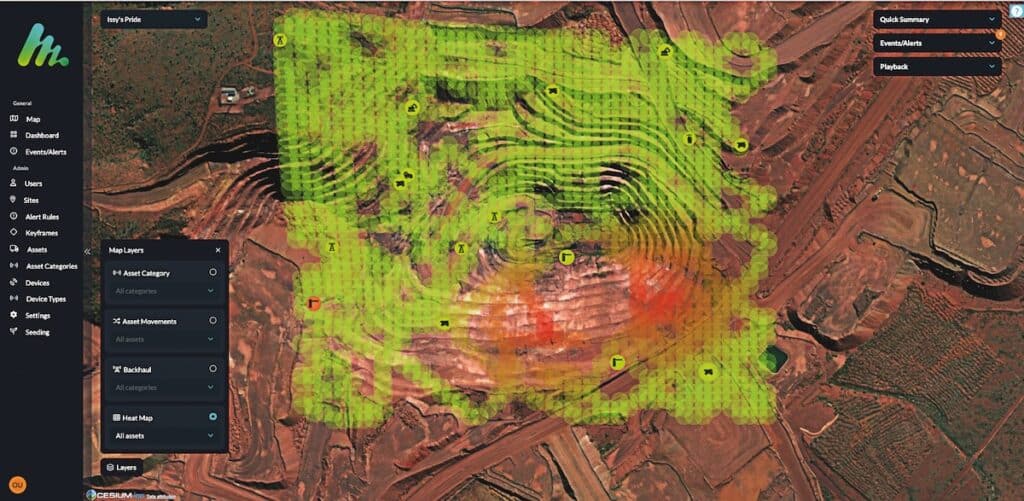
Rather than replacing existing teams, AMT has been designed to support them by improving capability.
“It’s not about highlighting gaps in people or teams,” Innis said.
“It’s about giving them a tool to visualise something that is very difficult to see and helping them troubleshoot faster.
“It helps narrow down the problem, whether it’s the network or something else.”
This capability becomes especially important as mining operations continue to invest in automation and advanced technologies. Innis pointed to his experience with autonomous systems, where network reliability is critical to maintaining confidence in those investments.
“I’ve seen autonomous haulage projects turned off because the network wasn’t performing, and that was one of the drivers for developing this tool. I knew the network was the issue, but I couldn’t show it.”
As mining companies invest more heavily in digital systems, the demand for reliable data continues to grow. Data may well be the new oil, as the saying goes, but without proper extraction and refining, it’s not especially useful.
“Everyone is data-hungry. They want AI, machine learning and more insights, but if the network isn’t there the data isn’t coming through,” Innis said.
“There are gaps in the data and that impacts the value of those systems. This is about supporting data integrity and ensuring a consistent flow of information.”
The platform is designed to integrate with a wide range of devices and systems across a mine site, regardless of vendor or interface maturity. While each new integration requires development work, once completed it can be replicated across other operations, improving deployment efficiency over time.
This scalability is particularly relevant as new technologies emerge. Machine Logic is already working to integrate data from systems such as Starlink, positioning the platform to support evolving connectivity solutions across mining operations.
At its core, AMT is intended to sit beneath the broader digital ecosystem, supporting data consistency and system performance, while providing the user with a quick and ready means of identifying issues that emerge.
“It’s a foundational layer that ensures data consistency,” Innis said.
“Once that’s in place, operations can focus on improving efficiency and productivity, knowing their systems are online and performing.”
Security has also been a key consideration in the platform’s design.
“It was about ensuring security and giving operations confidence that everything sits on their side of the fence,” Innis said.
Despite the complexity of the challenge it addresses, simplicity has remained central to AMT’s development.
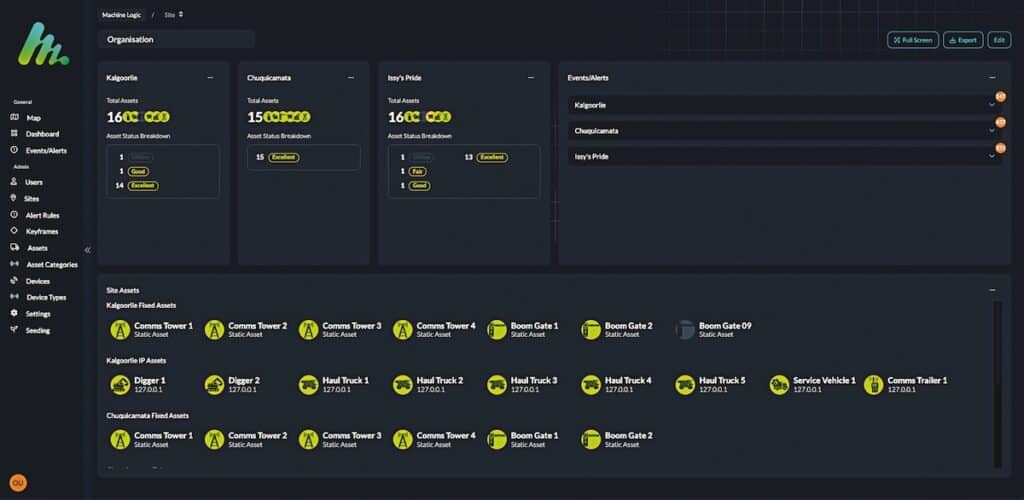
The platform has been designed with an intuitive interface that allows users to quickly assess asset status and identify issues without requiring deep technical expertise.
As mining professionals with plenty of experience in the field, Machine Logic’s two co-founders have found the reception to the platform gratifying.
“The UX [user experience] and usability were always a key part of the vision,” Innis said. “The feedback has been overwhelmingly positive. People find it simple to use, and the dashboards make it easy to understand what’s happening.”
As mining operations become more complex and interconnected, the ability to identify and resolve issues quickly is becoming increasingly important. By making network performance visible and understandable, AMT allows operations to move beyond assumptions and take a more proactive approach to managing their systems.
In an environment where uptime, efficiency and data integrity are critical, that visibility provides a clearer pathway to unlocking the full value of digital investment.