



Getting connectivity right is critical in mining OT environments, where device selection, site conditions and network architecture must all align.
Connectivity projects often don’t fail because the technology doesn’t exist. They fail because the wrong device ends up in the wrong part of the network.
A serial gateway rated for a climate-controlled comms room gets installed in an outdoor switchyard. An edge computer without hazardous-area certification gets specified into a zone that requires it. A protocol converter handles the bench test perfectly but can’t sustain throughput under the real-world load of a 30-device Modbus network.
These aren’t edge cases. They’re the kinds of problems that turn a straightforward operational technology (OT) upgrade into a months-long rework.
In the mining industry, the cost of getting device selection wrong isn’t a returns process. It’s unplanned downtime, delayed commissioning and safety systems that aren’t performing as designed.
Australia’s mining sector runs on OT infrastructure that spans enormous distances, harsh environmental conditions and mixed-generation control systems.
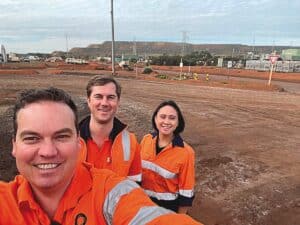
A single site might need serial connectivity for legacy analysers in a processing plant, Modbus conversion between field remote terminal units (RTUs) and a modern supervisory control and data acquisition (SCADA) platform, and wireless edge computing for remote pump stations that can’t be reached by cable.
Each of those problems has a different technical solution. And each of those solutions needs to account for temperature extremes, dust and vibration, power supply reliability, network topology, cybersecurity compliance and long-term maintainability, none of which are obvious from a product datasheet alone.
“The datasheet tells you what a device can do,” Madison Technologies national sales manager Luke Kavanagh said.
“It doesn’t tell you whether it’s the right device for your site, your network architecture, or your compliance requirements. That’s where most specification errors start.”
This is the gap that a technically capable distributor fills.
Madison Technologies distributes industrial connectivity hardware across Australia, but the relationship with vendors and customers goes deeper than stockholding. The engineering team works with integrators and operators during the design phase – before the bill of materials (BOM) is finalised – to validate that the hardware being specified fits the deployment environment.
That means asking the kinds of questions others don’t always ask. What’s the ambient temperature range at the installation point? Is there redundant power available or does the device need dual DC inputs to protect against single-supply failure? Are you converting protocols or just bridging physical layers? Does this site fall under a hazardous-area classification? What’s your cybersecurity compliance roadmap?
The answers determine whether a project needs a simple serial device server, a protocol gateway with diagnostic capability, or a wireless edge computer with IEC 62443 security compliance and a 10-year OS support lifecycle.
These are different products solving different problems, and specifying the wrong one creates risk that doesn’t surface until commissioning, or worse, during operation.
“We’ve seen projects where the hardware was selected from a catalogue without enough consideration for site conditions or network architecture,” Madison Technologies solutions engineer Corey Nesbitt said.
“A 10-minute conversation early in the design phase can save weeks of rework and tens of thousands in project cost.”
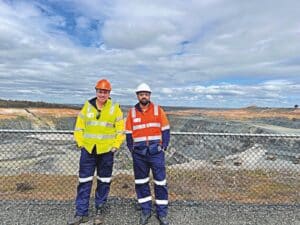
Industrial hardware vendors have significantly lifted the baseline in recent years, with dual Ethernet for network redundancy, wide-temperature operation, cybersecurity compliance built in rather than bolted on. That’s a good thing, but it also means more models, more configuration variants and more certification options to navigate.
For integrators working across multiple sites with different environmental and compliance profiles, the selection matrix has grown alongside capability. Getting it right still comes down to understanding the site, the network and the operational requirements before opening a catalogue.
When designing or upgrading OT connectivity on a mine site, that understanding is where the conversation should start.