


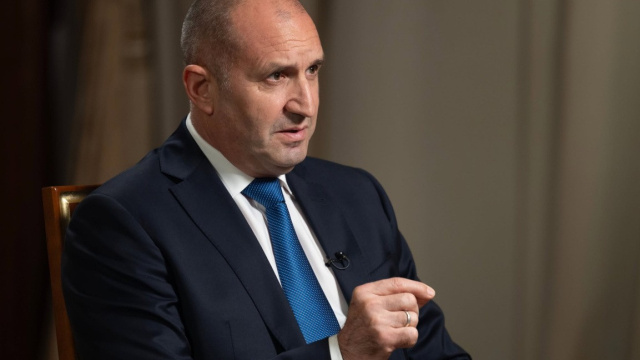
Prime Minister Rumen Radev announced that the Maritsa-Iztok Mine complex and the state-owned Maritsa-Iztok 2 thermal power plant will continue operating until 2038, providing a 12-year horizon for Bulgaria’s coal sector as the country navigates the transition toward cleaner energy sources.
Speaking after discussions in Brussels, Radev said the future of coal-fired power generation and the protection of workers in the sector were among the key issues raised with European institutions. According to him, Bulgaria succeeded in convincing the European Commission to support the energy reforms proposed by the government.
“Maritsa-Iztok Mine and Maritsa-Iztok 2 TPP will remain in operation until 2038, but we managed to convince the Commission of the appropriateness of the energy reforms we are proposing, so that the interests of our miners are protected and a smooth process of reclamation and transformation is guaranteed,” Radev stated.
The prime minister emphasized that the extended operating period would allow for a gradual transition in the coal regions rather than a sudden shutdown of facilities. He also indicated that discussions would continue with local authorities from the areas most affected by the shift away from coal. A meeting is planned with the mayors of Stara Zagora, Pernik, and Kyustendil, the three regions most closely tied to Bulgaria’s coal industry.
Radev also pointed to the possibility of substantial European financial support during the transition process. According to him, Bulgaria can expect significant resources through the EU’s Just Transition mechanisms, designed to assist regions dependent on carbon-intensive industries as they adapt to new economic realities.
“We personally agreed with European Commission President Ursula von der Leyen that if Bulgaria, Greece, and Romania present larger and more ambitious projects in the field of cross-border cooperation and connectivity, particularly infrastructure projects, funding can be secured,” Radev said.
He added that the three neighboring countries are exploring opportunities to strengthen transport and infrastructure links, although further discussions with Romania will continue once a new Romanian prime minister is appointed.
According to Radev, both the Just Transition Plan and other European financing instruments could provide Bulgaria with considerable support as it balances energy security, economic transformation, and regional development in the years ahead.