


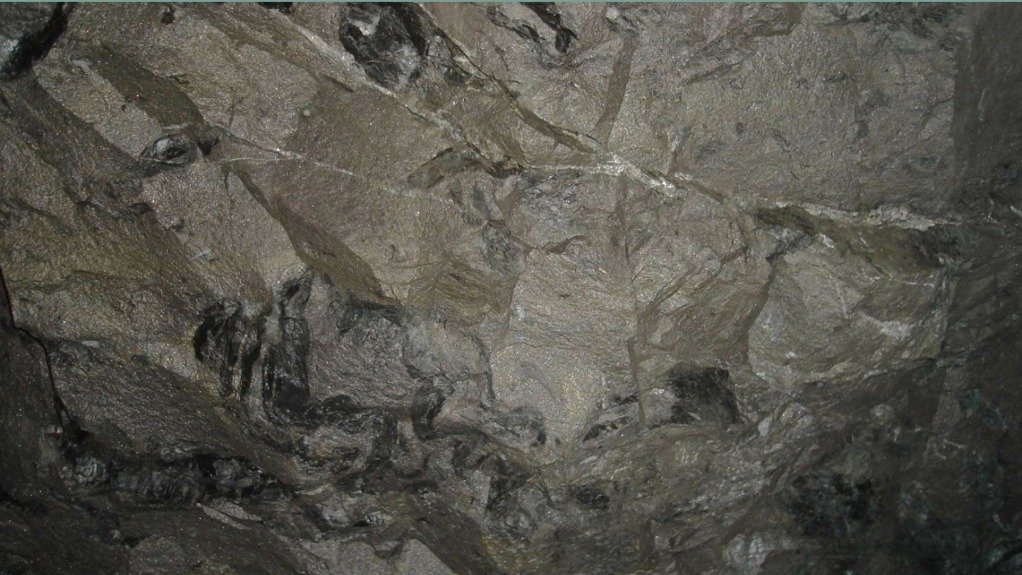
London- and Toronto-listed Meridian Mininghas intercepted a new volcanogenic massive sulphide (VMS) layer of strong precious and base metals mineralisation at the Santa Helena project, in Brazil.
Santa Helena is a high-grade copper/gold VMS project forming part of Meridian’s Cabaçal hub strategy in the country.
The new VMS layer discovery marks the second discovery of gold, silver, zinc and leadmineralisation on site, located below and east of the Santa HelenaCentral resource.
The CD-869 drill hole, in particular, returned a seven-metre-wide zone of gold/silver and zinc/lead-dominated mineralisation, including an interval containing visible gold. The hole returned intercepts of 7.2 m grading 1.4 g/t gold, 0.1% copper, 24.3 g/t silver, 2.3% zincand 0.9% lead from 177 m.
The discovery ultimately highlights the prospectivity of the down-dip and down-plunge extensions of Santa Helena North’s surface geophysical and geochemical anomalies.
Meridian says the gold/silver and zinc/lead mineralisation remains open and follow-up drilling continues.
“CD-869’s discovery of a second layer of strong precious and base metal mineralisation at Santa Helena presents an exciting opportunity for Meridian’s shareholders. The potential of further resource growth is enhanced as is the future installation of a second hub along the Cabaçal Belt. CD-869 and the recently reported CD-852 at Álamo both intercepted gold-rich mineralisation,” CEO Gilbert Clarkconfirms.
He adds that CD-869’s visible gold is an attribute rarely seen at Santa Helena, and this may signal an additional structural gold overprint or gold-enriched VMS mineralisation like that seen at Cabaçal.
Following the company’s initial public offering in London in May, its exploration programmes remains well funded and continues to deliver a high frequency of exceptionally encouraging results. “This reflects the high prospectivity of what we see as South America’s most prospective VMS belt,” Clark concludes