



Reliability is reshaping how surface miners think about value, cost and performance across the entire operation.
Australia’s surface mining sector is evolving rapidly as companies focus on improving productivity, strengthening reliability and delivering greater long-term performance across increasingly complex operations.
But rather than focusing narrowly on up-front procurement costs or replacement intervals, the industry is beginning to recognise that true operational value is created through reliability, lifecycle performance and system-wide operational continuity.
MASPRO global surface mining reliability lead Matthew McCulloch said this shift reflects a more mature understanding of what truly drives performance in surface mining environments.
“A lot of component decision-making still centres on the most visible cost, which is purchase price,” McCulloch said.
“But in surface mining, the real operational cost is downtime.
“The real value shows up in improved equipment availability, reduced maintenance intervention and more consistent productivity.”
Rather than treating components as isolated consumables, McCulloch said more operators are recognising that reliability is shaped by the interaction between engineering design, operating conditions and maintenance strategy.
“The physical operating environment changes everything,” he said.
“Different commodities, production pressures and site conditions all influence how equipment performs.
“Abrasion, contamination and ground conditions all feed into component life.”
That variability is evident across sites, even within the same commodity. McCulloch recently observed two lithium operations in the Pilbara with very different wear profiles despite operating under similar conditions on paper.
“One operation experienced significantly higher wear rates while the other remained relatively stable,” he said.
“On paper the sites looked similar, but differences in ground conditions, operating practices and equipment utilisation changed the reliability outcome.”
These kinds of differences are reinforcing the importance of close collaboration between miners and suppliers, particularly when it comes to understanding site-specific requirements.
“The biggest gains happen when procurement, maintenance and operations are aligned around reliability outcomes rather than separate internal KPIs,” McCulloch said.
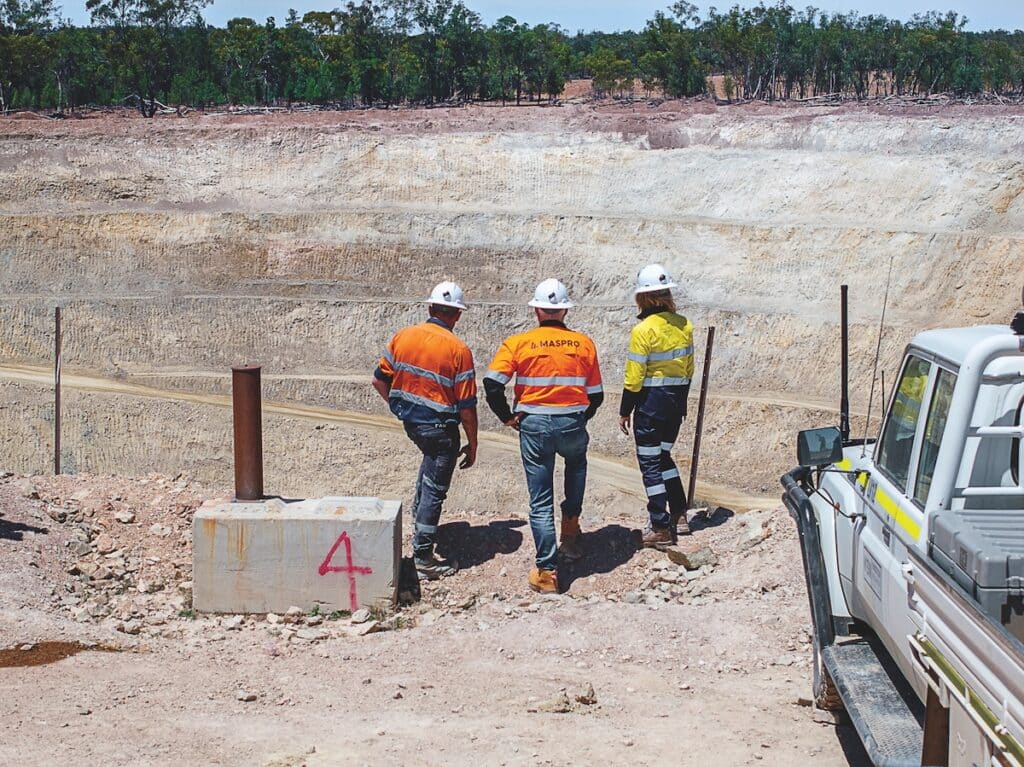
“When procurement understands the operational cost of failure and maintenance teams contribute real-world performance feedback, decision-making becomes much more effective.”
McCulloch said more miners are now prioritising quality and lifecycle performance alongside cost considerations, particularly where downtime has a direct impact on production.
“We recently discussed whether cost is the number-one priority,” he said.
“Yes, it matters, but it doesn’t come ahead of quality. Customers want products that last longer, avoid premature failures and deliver consistent performance.”
A key part of that shift is the growing use of long-term trials and real-world performance tracking to assess reliability before wider deployment.
MASPRO works closely with customers to gather operational feedback and translate it into measurable return-on-investment outcomes. In many cases, miners are now running extended trials across multiple machines over 12 months or more to properly evaluate lifecycle performance under real site conditions.
That longer-term approach is also strengthening supplier relationships, with greater emphasis on collaboration, responsiveness and accountability.
McCulloch said customers increasingly value suppliers who spend time on-site, listen to operational challenges and work alongside maintenance teams to solve problems.
“One thing we focus on is going above and beyond for customers,” he said.
“If they’re experiencing ongoing issues, we work closely with them to resolve those challenges and improve performance.”
Transparency is also an important part of that relationship.
“If we identify an issue with one of our products, we notify customers quickly so it can be addressed and resolved,” McCulloch said.
As surface mining operations become more complex and production pressures continue to increase, McCulloch believes the industry will continue shifting toward lifecycle-based decision-making, where reliability is treated as a system outcome shaped by engineering, maintenance strategy and operational collaboration across the value chain.