



Kal Tire’s Mining Tire Group has achieved independent ISO verification for the carbon footprint methodology underpinning its KalPRO Maple Program.
The verification provides mining customers with added confidence that the carbon savings reported through the program are credible, transparent and based on recognised greenhouse gas accounting principles.
The Maple Program calculates the environmental benefits associated with extending tyre life through repairs and retreading rather than purchasing new tyres.
SCS Global Services, an international environmental and sustainability verification organisation, completed the third-party review.
The program’s methodology was evaluated against ISO 14067:2018, the international standard for product carbon footprints, with the independent verification conducted in accordance with ISO 14064-3:2019.
Introduced in 2019, the Maple Program provides participating mining customers with annual certificates detailing the calculated carbon emissions and oil savings achieved by choosing Kal Tire repair and retreading solutions instead of replacing tyres with new equivalents. The data can also be used in sustainability reporting.
“Mining companies are increasingly looking for reliable data to demonstrate the environmental impact of the decisions they make across their operations,” Kal Tire’s Mining Tire Group senior vice president Miles Rigney said.
“This verification helps reinforce the role tire management can play in that broader picture, particularly as mines look for practical ways to reduce waste and make better use of high-value assets.”
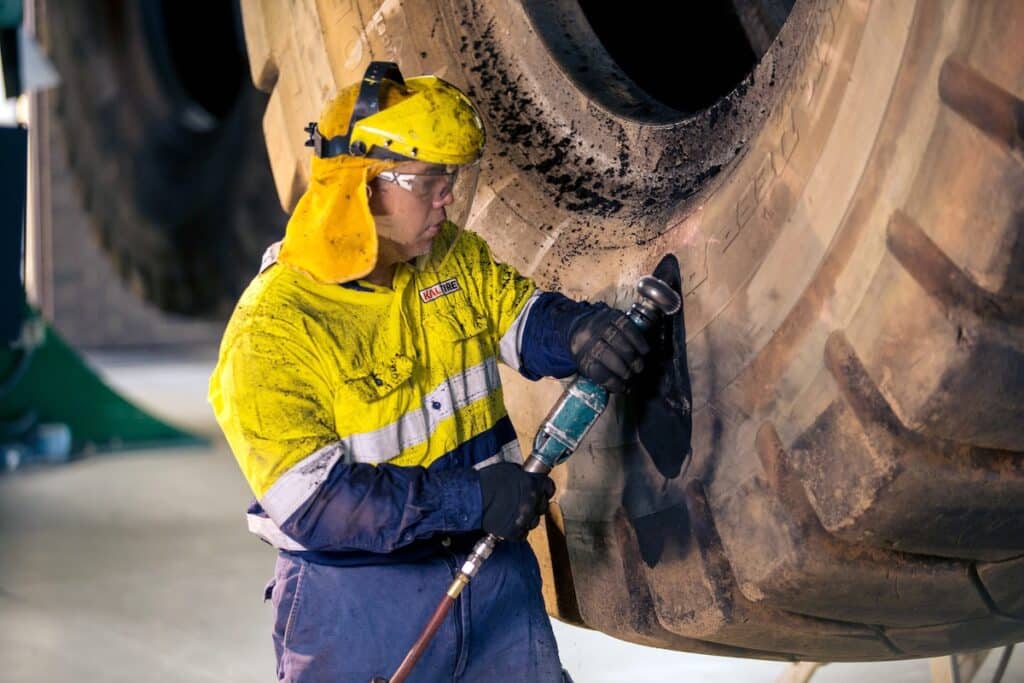
The Maple Program covers conventional repairs, KalPRO Ultra Repair, retreading and KalPRO Ultra Tread for mining tyres ranging from 25–63 inches.
Its lifecycle carbon footprint methodology was developed using more than 25 years of Kal Tire repair and retreading data.
The methodology calculates the difference in carbon emissions between two options providing the same tyre service life: replacing a tyre with a new equivalent or extending the existing tyre’s life through repair or retreading.
“Extending the life of a mining tire can avoid the need to manufacture and transport a replacement tire earlier than necessary, but it is important that the environmental benefit is quantified in a consistent and robust way,” Rigney said.
“The Maple Program turns those tire decisions into measurable data customers can use in Scope 3 reporting. In 2025, approximately 70 mining customers across six regions reported saving more than 32,700 tonnes of calculated CO₂ savings.”
The ISO verification marks the latest development for a program that has helped mining operations quantify the environmental value of tyre life extension since 2019.
As mining companies increasingly focus on emissions across their supply chains, Kal Tire expects reliable measurement to become more important in demonstrating how tyre-management strategies can support sustainability objectives.
Kal Tire’s Mining Tire Group provides tyre services and supply to more than 230 mine sites across five continents. The company also owns and operates five off-the-road tyre retreading facilities in Canada, West Africa, Chile and Mexico.