



To own China Coal Energy, you need to be comfortable with a coal heavy business that is gradually leaning on coal chemicals for extra flexibility. The latest August data shows year to date commercial coal production and self produced coal sales below the prior year, while polypropylene and some other chemicals hold steadier. That mix keeps the key near term catalyst squarely on execution of new coal and chemical capacity, plus cost control.
The biggest operational risk right now is that ongoing capital spending on mines and coal chemical projects runs into weaker utilization if policy or demand tightens. The August figures do not radically change that risk profile. They reinforce the need to watch whether coal volumes stabilize and whether higher value chemicals can offset pressure on coal pricing and any future regulatory constraints.
The production announcement for August 2026 is the clearest operational reference point for this update. Commercial coal output for the month trailed the prior year, both for August and on a year to date basis. Polyethylene and polypropylene production for the year to date sat above the previous period. That combination matters because coal still drives most revenue, with chemicals helping to soften swings.
For catalysts, those production trends feed directly into questions on asset productivity at new mines like Libi and WISCO and on coal chemical plants. Lower coal throughput heightens the risk that heavy capex delivers weaker returns, especially with earnings forecasts already pointing to declines over the next three years. More resilient polyolefin and methanol volumes, if sustained, could still support the case for investors who believe China Coal Energy can keep improving efficiency and managing through energy transition headwinds.
China Coal Energy is currently covered by analysts who project revenues of CN¥168.1b and earnings of CN¥19.4b by 2029, based on an assumed 5.3% yearly increase in revenue and an earnings rise of CN¥1.6b from CN¥17.8b today.
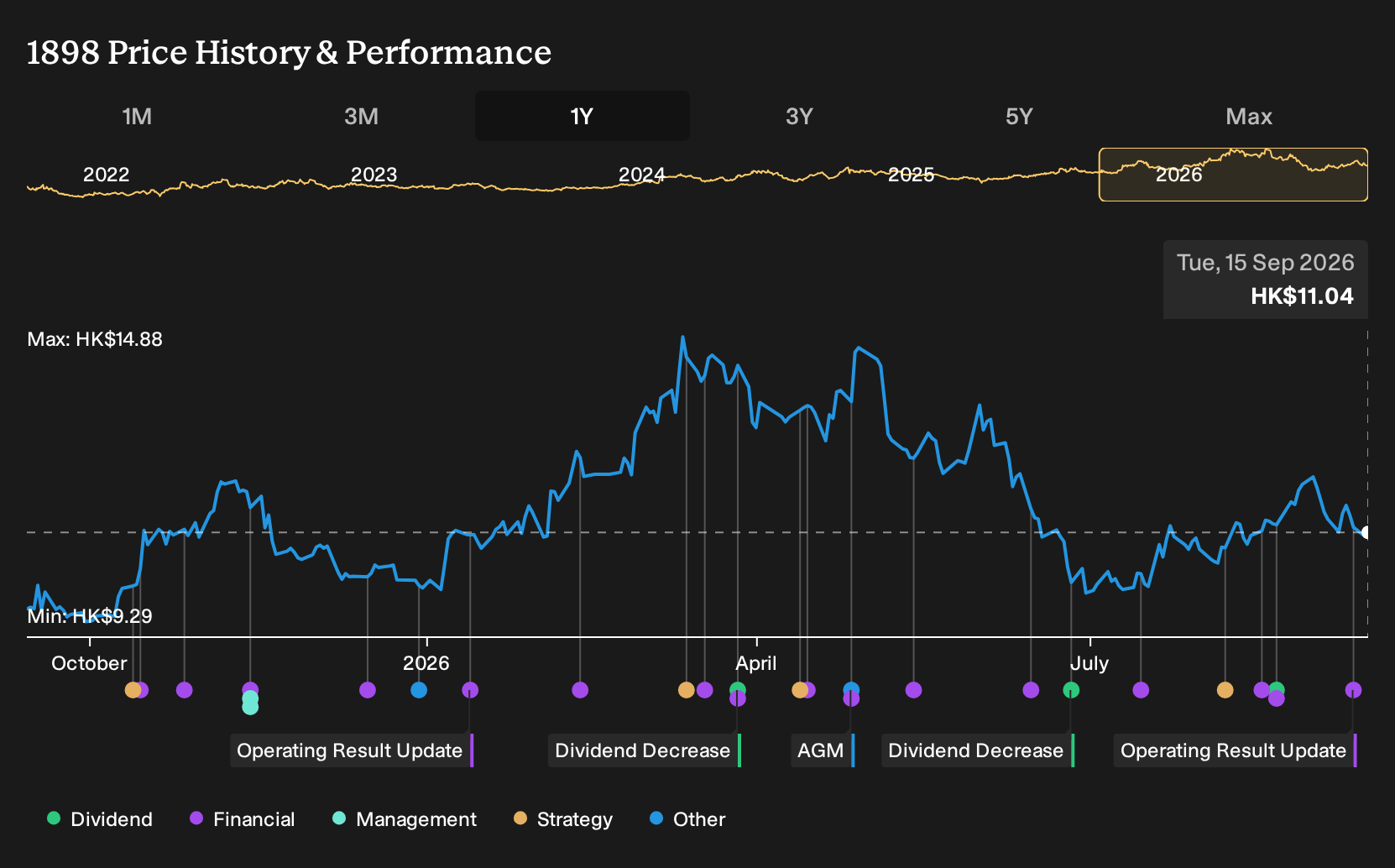
Uncover how China Coal Energy’s fair value indicates a 41% potential upside to its current price, which could narrow quickly if sentiment on coal and chemicals improves.
Exploring Other Perspectives
One contrasting angle on China Coal Energy focuses on decarbonization risk rather than near term production trends. The most pessimistic analysts were only pencilling in CN¥155.3b of revenue and CN¥16.6b of earnings by 2029 before this August update. That is a much flatter path. It shows how far views can differ and why you may want to test several scenarios after this news.
Explore another China Coal Energy fair value estimate, including one that suggests it could be worth just HK$15.55!
Decide For Yourself
Don’t just follow the ticker; dig into the data and build a conviction that’s truly your own.
- A great starting point for your China Coal Energy research is our analysis highlighting 4 key rewards and 2 important warning signs that could impact your investment decision.
- See our latest analysis for China Coal Energy. The report includes a comprehensive fundamental analysis summarized in a single visual, the Snowflake, making it easy to evaluate China Coal Energy’s overall financial health at a glance.
Looking For More Investment Ideas Beyond China Coal Energy?
If the latest China Coal Energy update has sharpened your view on coal and chemicals, it can help to compare that thesis with completely different businesses. Broader context makes it easier to judge whether the risk and reward on offer here truly fits your portfolio.
The Simply Wall St Screener lets you scan other opportunities quickly, filter by the traits you care about, and pressure test whether China Coal Energy still deserves a place alongside them.
- If capital preservation and smoother returns matter most to you, check out a 102 resilient stocks with low risk scores that may better match a cautious approach.
- If you are hunting for quality at a reasonable entry point, run through a 194 high quality undervalued stocks that combine fundamentals with pricing that some investors may find appealing.
- If you want to widen the opportunity set beyond well known stocks, cast a wider net across a 623 high quality undiscovered gems that might not yet be heavily followed.