


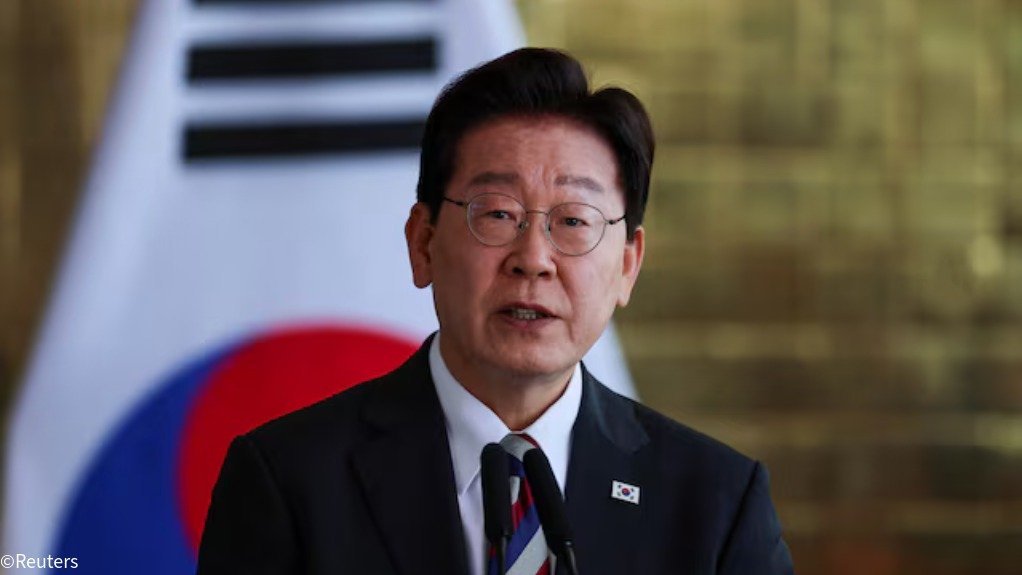
South Korean President Lee Jae Myung hosted the country’s first summit with the leaders of five Central Asian countries on Wednesday, putting critical minerals, energy and supply-chain cooperation at the centre of Seoul‘s push to deepen ties with the resource-rich region.
The summit brought together the leaders of Kazakhstan, Uzbekistan, Turkmenistan, Kyrgyzstan and Tajikistan and capped three days of bilateral meetings that produced more than 70 agreements and memorandums of understanding spanning energy, mining, infrastructure, technology and investment.
Speaking at a business forum after the summit, Lee said South Korea was seeking to expand cooperation beyond resource imports and deepen industrial partnerships.
“Beyond simple raw materials trade, we must strengthen cooperation across the entire critical minerals value chain, from exploration and refining to high-value materials processing and finished-product manufacturing,” Lee said.
He said Seoul would support those efforts through South Korean-led rare metals centres in Central Asia, aimed at promoting joint research and workforce training.
The summit marks a new phase in Seoul‘s engagement with Central Asia, as the resource-poor country seeks to diversify supplies of crude oil, uranium and other strategic minerals, while expanding opportunities for its companies.
The meeting established a framework for regular biennial leaders’ summits, with Kazakhstan set to host the next gathering in Astana in 2028.
South Korea and Kazakhstan this week signed agreements covering nuclear energy, crude oil and critical minerals and upgraded ties to a comprehensive strategic partnership.
Meetings with Uzbekistan, Turkmenistan, Kyrgyzstan and Tajikistan also produced accords covering strategic minerals, energy, infrastructure, trade, investment and digital technologies.
At the business forum, SK Group chairperson Chey Tae-won highlighted opportunities to expand cooperation.
“We will expand critical minerals cooperation beyond simple development to encompass the entire supply chain, from refining to materials production,” Chey said.
Chey also called for stronger cooperation in renewable energy and nuclear power.
South Korea has pursued deeper economic ties with Central Asia and other Eurasian partners under its New Northern Policy launched in 2017, seeking to diversify supplies of energy and strategic minerals while creating new opportunities for South Korean companies.