


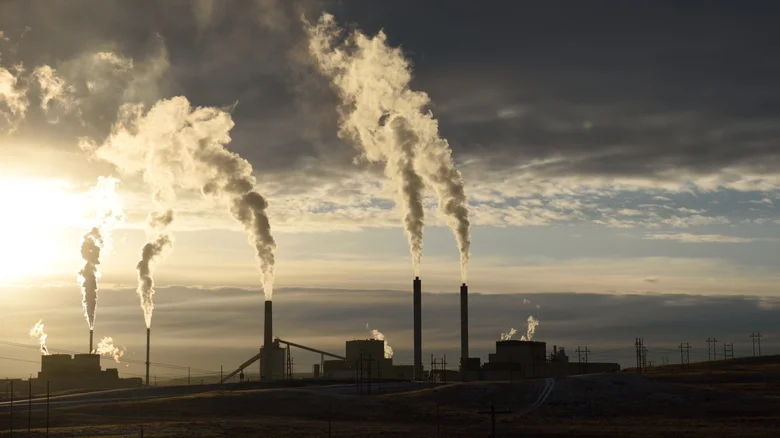
Here’s a fact to consider: Coal, by itself, is responsible for the production of more electricity than any other energy source on the planet. This is despite coal’s negative effects on both the climate and human health. Compared to natural gas, coal gives off almost twice the amount of CO2 per BTU. The particulate matter it gives off causes as many as 52,000 deaths each year in the U.S., and the country with the most coal power plants in the world is not even the U.S.
The reality about coal is this: It is inexpensive, especially if you don’t focus on its impact on the environment and people’s health. The infrastructure for moving it from mines to customers has long been in existence. Plus coal can be found in numerous places worldwide, making it accessible and easily transportable to most places it would be used. This is why even though the U.S. usage of coal for electricity has declined from 50% to less than 30%, thanks to natural gas from shale becoming less expensive than coal, its use in other parts of the world is rising. China burns 50% of the world’s coal output each year.
Another coal-related issue is the number of new coal power plants recently built. These are located in places like the Philippines, Indonesia, and other Asian locations. With a 40-year service life, it is unlikely that these plants will be shut down earlier than that.
Will the Earth ever run out of coal and are there better sources of energy for electricity?
According to the U.S. Energy Information Administration, as of December 31, 2021, there were 1.16 trillion short tons of proved recoverable reserves of coal, with 22% of that amount located within the United States. Based on U.S. consumption patterns in 2026, these reserves would last us around 418 years. Other major producers include Russia with 15%, Australia with 14%, China with 14%, and India with 11%. But even China, whose electricity consumption is double that of the U.S., has stopped growing coal generation in half the country thanks to a recent move to more renewable energy sources.
Renewable sources are exactly where the future of electricity generation lies, even if we are moving toward that future very slowly. The costs of both solar and wind generation are dropping, while battery storage systems are being used to store these types of energy when the sun doesn’t shine and the wind doesn’t blow, shattering the big myth about renewable energy you need to stop believing. But we are getting closer to renewables being as big a piece of electricity production as fossil fuels are, with all fossil fuels accounting for 57% of global electricity generation, while renewables, including wind, solar, nuclear, and hydro, stand at 43%. Coal alone has a 33% share of the worldwide tally.
This means that coal is here to stay for a while, as far as the world’s electricity generation is concerned. Many countries will continue to depend on it because it is priced right and is easy to acquire, wherever you happen to be located.