


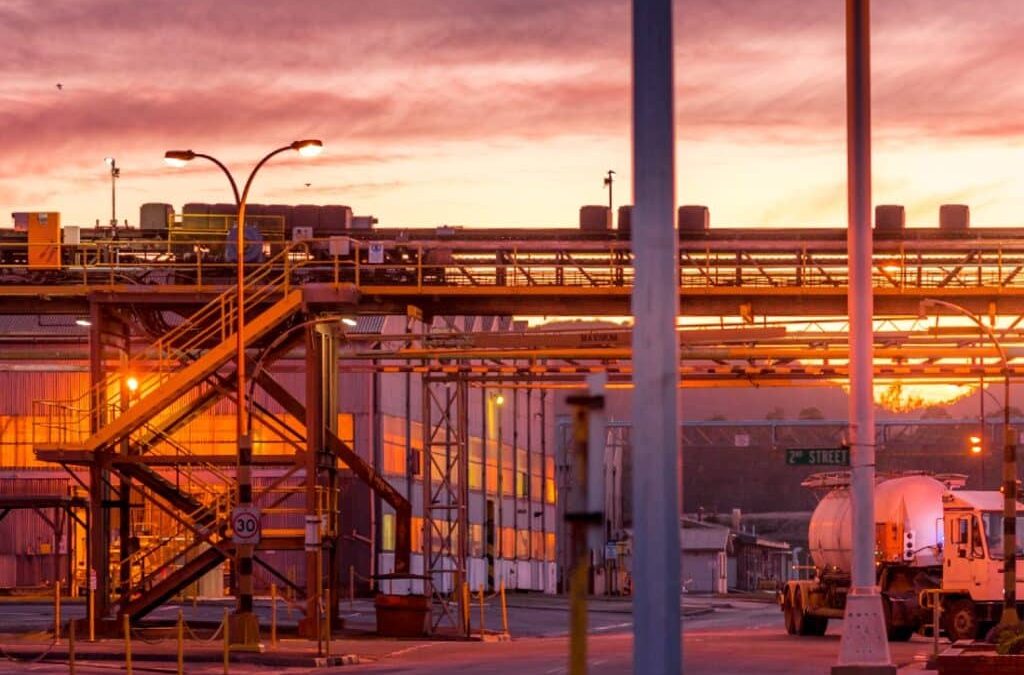
Rio Tinto, the Tasmanian Government and the Australian Government have reached an agreement to secure ongoing operations at Bell Bay Aluminium in northern Tasmania through to the end of 2031.
Under the agreement, Hydro Tasmania will continue to supply electricity to the site, which is 100 per cent owned by Rio, with both Tasmanian and Federal governments providing additional support as local energy systems continue to evolve.
“These agreements will provide Bell Bay Aluminium with an operating pathway through to 2031, and increased certainty for our people, suppliers and the northern Tasmanian community,” Rio Tinto aluminium and lithium chief executive Jérôme Pécresse said in a statement.
“Bell Bay Aluminium has been part of Tasmania’s heritage for 71 years, and we are proud of the jobs, exports and economic value it creates for the state.”
The news follows an initial, in-principle 12-month power agreement last year to safeguard the smelter’s immediate future.
Bell Bay – Australia’s first aluminium smelter and the first in the Southern Hemisphere – opened its doors in 1955 and produces around 190,000 tonnes of aluminium every year, supports 550 full-time jobs and more than 1200 jobs indirectly.
The site’s legacy has been commended by the Australian Aluminium Council (AAC), which has welcomed the news as “a new era dawning for Tasmania”.
“[The] commitment from the Tasmanian and Federal Governments demonstrates recognition of aluminium’s strategic importance to Australia’s economy, manufacturing base and national interest,” AAC chief executive officer Marghanita Johnson said.
“Australia’s aluminium industry competes not only with global companies, but with governments actively backing their own industries.”
Aluminium is becoming an increasingly important metal used in transport, infrastructure, construction, defence capabilities and emerging technology markets.
Strong, coordinated policy settings are needed to restore competitiveness, support value-added industry, and strengthen Australia’s position in trusted global supply chains for the long term, AAC said.