


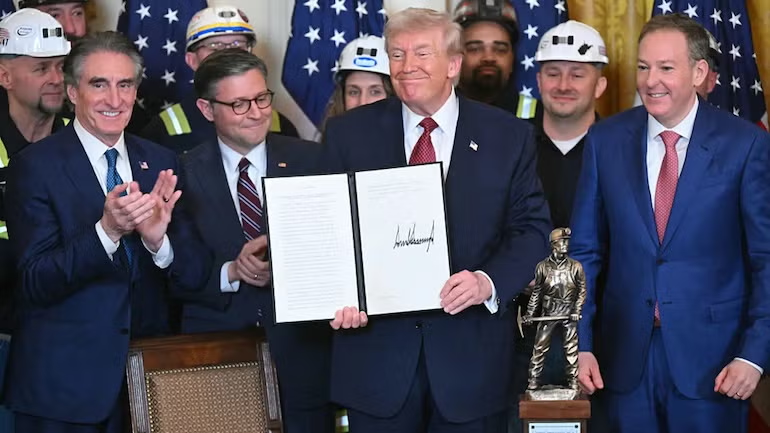
US president Donald Trump on 11 February ordered the federal government’s largest energy customer, the US Defense Department, to prioritise coal-fired electricity and secure long-term power purchase agreements with coal plants for military installations, characterising the move as a national-security measure for a grid he says is increasingly exposed to fuel insecurity and the effects of intermittent generation.
This is the administration’s latest attempt to revive an industry that has struggled to compete against cheaper energy resources. The president said he has also directed the Department of Energy to issue funds to keep coal plants open in West Virginia, Ohio, North Carolina and Kentucky.
Trump signed the executive order at a White House event attended by Peabody Energy CEO James Grech. “We’re going to be buying a lot of coal through the military now,” Trump said. Shares in Peabody rose 4% in extended trading.
The coal industry has been in state of decline for years as it struggled to compete with natural gas and renewable energy. About 16% of US electricity generation came from burning coal in 2023, down from 51% IN 2002, according to the US Energy Information Administration.
The executive order, titled “Strengthening the United States’ National Defense with America’s Beautiful Clean Coal Generation Fleet” directs the Defense Dept to pursue long-term power purchase agreements, or similar contracts, with coal plants to supply electricity to military installations and other mission-critical facilities. It says priority should go to projects that improve ‘grid reliability and blackout prevention, on-site fuel security and mission assurance’ for defense and intelligence operations.
In an accompanying fact sheet, the White House said the directive is aimed at ensuring “uninterrupted, on-demand baseload power” for defense facilities, arguing that coal units with on-site fuel inventories offer an advantage during extreme weather and other disruptions. The order does not specify how long-term the agreements would be, or detail precisely how they would be executed.