


Fresh international demand, tightening energy markets and the expansion of digital infrastructure are giving Australia’s coal industry renewed momentum.
A changing global energy landscape is redefining the outlook for Australian coal, with investment and demand signals pointing to renewed resilience
Demand from India, energy security concerns and the global data centre boom are reshaping the outlook for Australia’s coal industry, as producers double down on high-quality, long-life assets.
Recent acquisitions, financing deals and policy developments suggest coal remains deeply embedded in Australia’s export economy and broader industrial supply chains.
Investment activity has been one of the clearest signals of the sector’s resilience, particularly in metallurgical coal, which continues to underpin steelmaking demand across Asia.
Strategic assets back in focus
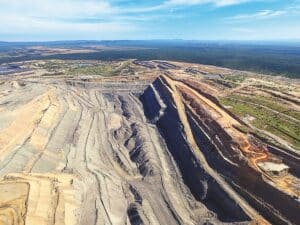
One of the most significant recent developments has been Yancoal’s proposed acquisition of the Kestrel mine in the Bowen Basin, described as Australia’s largest producing underground coal mine, for up to $US2.4 billion ($3.36 billion), a move that underscores the strategic value attached to premium metallurgical coal assets. The transaction would secure Yancoal an 80 per cent stake in Kestrel, with the remaining 20 per cent owned by Mitsui.
Kestrel has 164 million tonnes of reserves, a 25-year mine life and a substantial coal resource of 406 million tonnes. The mine recorded saleable production of 5.9 million tonnes in 2025.
The proposed acquisition highlights Yancoal’s shift towards premium metallurgical coal, which remains essential to blast furnace steelmaking.
Coal Australia chief executive officer (CEO) Stuart Bocking said India’s role in Australia’s coal export outlook is expected to strengthen further as steel production and energy demand accelerate.
“India is already one of Australia’s most important export markets for metallurgical coal and its role is only set to grow,” Bocking told Australian Mining.
While Chinese customers accounted for 31 per cent of Yancoal’s export volumes last year, only four per cent of Kestrel’s coal was delivered into China. Instead, the mine’s key markets include Japan, India, Korea and Taiwan, with India representing Kestrel’s largest market.
Yancoal said the long-term outlook for metallurgical coal remains “structurally attractive”, driven by sustained steel demand growth in Asia and a constrained global supply pipeline.
“Kestrel is highly leveraged to these dynamics, with sales predominantly into Asia – including Japan, Korea, India and Southeast Asia – and limited exposure to lower-growth markets,” the company said.
Yancoal also pointed to the tightening availability of premium-quality metallurgical coal globally, suggesting Kestrel’s product quality positions it strongly relative to the Platts premium low-volume hard coking coal (PLV–HCC) benchmark.
Yancoal Australia CEO Sharif Burra said the acquisition of Kestrel represents a strong strategic fit for the company.
“Kestrel delivers increased scale and diversification to Yancoal’s portfolio and is expected to contribute premium metallurgical coal into our product mix,” Burra said. “The acquisition positions us to deliver greater value to our shareholders and consolidates Yancoal’s position as a leading Australian coal miner.”
Queensland Minister for Natural Resources and Mines Dale Last described Yancoal’s proposed Kestrel acquisition as a vote of confidence in the state’s resource sector.
“Queensland is home to some of the world’s best coal mines and it makes sense that Yancoal is looking to expand its portfolio in our backyard,” Last said.
“I have made it clear to the sector and the investment community that we are open for business, we have a stable operating environment, and we will throw our support behind those companies who want to do business here.”
Financing confidence returns to coal
The deal also reflects a broader consolidation trend across the coal sector, where scale, productivity and asset quality are becoming increasingly important competitive advantages.
Financing activity suggests lenders remain willing to back coal projects tied to energy security and industrial demand.
Whitehaven Coal recently secured a major funding boost as part of efforts to refinance its acquisition credit facility and strengthen its capital structure following the integration of the Daunia and Blackwater metallurgical coal operations, also in the Bowen Basin.
The refinancing activity points to a shift in the way some financial institutions are assessing coal exposure, with geopolitical uncertainty and concerns over reliable energy supply reshaping earlier environmental, social and governance (ESG)-driven lending restrictions.
“With Whitehaven’s strengthened credit profile and successful integration – and initial improvements – of the Daunia and Blackwater metallurgical coal operations, we are focused on refinancing our acquisition credit facility and establishing a capital structure with more diverse, longer tenor and lower cost debt facilities,” Whitehaven managing director and chief executive officer Paul Flynn said.
Flynn said support from banking partners reflects confidence in Whitehaven’s financial discipline, cash flow generation and capital management approach.
Underlying much of the optimism around metallurgical coal is the anticipated rise in Indian steel production.
Commodity Insights forecasts global seaborne demand for metallurgical coal to grow by 28 per cent from 2024 to 2040, driven largely by India’s industrial expansion and urbanisation.
Global steel demand is also expected to increase as developing economies across Southeast Asia continue investing in infrastructure, construction and manufacturing.
That outlook is reinforcing confidence among major miners with exposure to Queensland’s metallurgical coal sector.
When asked about BHP’s appetite for any divestments of coking coal assets in Queensland, the miner’s chief financial officer Vandita Pant told the Australian Financial Review she is “very bullish” on the attractiveness of metallurgical coal.
“We think India was at 164 million tonnes of steel production last year, and it will grow to 400 to 500 million tonnes by 2050, and that’s very, very exciting,” Pant said. “We have really high-graded our portfolio in Queensland to be the highest quality [metallurgical] coal in the world, so that’s a portfolio strength.”
While Pant acknowledged headwinds in the market due to metallurgical coal prices, she said the market is cyclical and BHP is positioning the business for higher production and lower costs.
While critical minerals and renewable energy projects are increasingly prominent in policy discussions, coal remains a major contributor to employment, royalties and export earnings, particularly in Queensland and New South Wales.
Energy demand reshapes outlook
Governments continue to support mine extensions and ongoing production as they seek to balance energy transition ambitions with economic stability and regional employment outcomes.
At the same time, thermal coal is finding support from rising electricity demand tied to the rapid expansion of global data centre infrastructure, with Australia emerging as a key destination for data centre investment.
According to the Department of Industry, Science and Resources, between 2023 and 2025 companies announced plans to make investments in Australian data centres that could scale up to more than $100 billion, underscoring the nation’s growing role in Asia-Pacific digital infrastructure markets.
The growth of artificial intelligence (AI), cloud computing and digital services is increasing pressure on electricity networks, with data centres requiring reliable baseload power.
For coal producers, this shift is adding another layer to the long-term demand outlook, particularly in regions where renewable generation alone may struggle to provide consistent supply. Bocking said recent geopolitical tensions and rising power demand from AI and data centres had “brought energy security back into sharp focus”, reinforcing coal’s ongoing role in reliable baseload power generation.
Recent market conditions have also reinforced coal’s economic importance.
Price rallies across thermal and metallurgical coal have improved project economics and supported renewed workforce demand, including reports of a fly-in, fly-out (FIFO) boom linked to higher coal prices.
The result is a coal sector that is continuing to evolve.
Investment is increasingly concentrated in high-quality, long-life assets. Financing is becoming more closely linked to energy security and industrial reliability. Governments are seeking to balance transition goals with economic realities.
And miners are positioning themselves around the strongest long-term demand centres, particularly India and Asia.
For Australia’s coal industry, the latest wave of acquisitions, refinancing activity and policy support suggests the sector remains a central part of the nation’s mining economy, and one that companies believe still has decades of strategic relevance ahead.
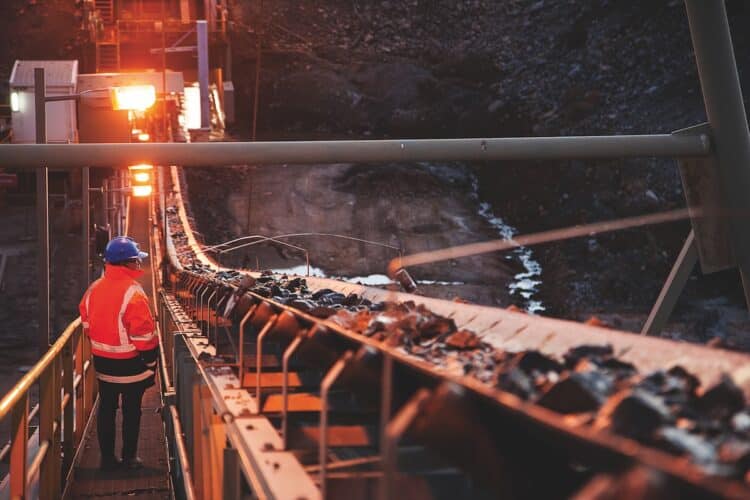
Nyngan Australia June 20th 2012 : Shallow depth of field image of a miner inspecting ore rocks on a conveyor in NSW Australia