

South Africa’s State power utility is looking to develop new revenue streams as it prepares to unbundle and relinquish its dominance in electricity generation and transmission.
Eskom executives are meeting this week to discuss how to approach the liberalisation of the electricity market in South Africa, marking a significant shift in the utility’s public position on President Cyril Ramaphosa’s drive to reform the industry.
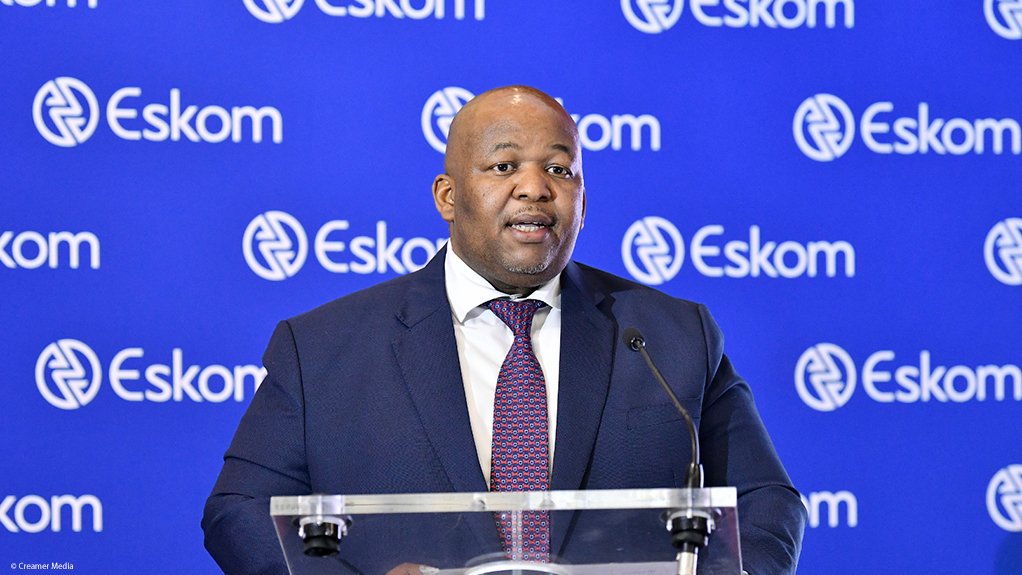
“We have really abandoned the notion of owning everything or doing everything by ourselves,” Chief Executive Officer Dan Marokane said in an interview with Bloomberg Television. “We are going into the strategy session in the next three days so we can align on what the end state looks like for us.”
Eskom previously expressed concerns about plans to split the company into generation, transmission and distribution units.
But Marokane said the reforms were “irreversible” and the utility is looking ahead to supplying power to data centers, bitcoin miners and electric vehicles, generating more renewable energy and exporting bulk power to bolster its bottom line in the years ahead.
“The sector is reforming; it is changing in terms of the supply industry,” he said. “There are more generators. There are going to be more distributors and traders in the space.”
Marokane nonetheless expects Eskom to remain a dominant generator in the regional power market. “We still provide in excess of 85% to 90% of the country’s electricity,” he said, while acknowledging “those who are coming in, chipping away at that market share of ours.”
“Naturally, in a monopoly, when you undermine the monopoly, and the economy’s not growing, market share will reduce,” Marokane said. “And that’s the case. Now, what we need to do is to use our strengths to look at other offerings that others may not be able to give.”
South Africa endured years of rolling power cuts due to mismanagement at Eskom during former President Jacob Zuma’s scandal-marred rule, which ended in 2018. The situation has since stabilised and the utility now has three to five gigawatts of excess generating capacity, according to its CEO.
That’s not solely due to improvements in its performance, with many businesses and households installing their own solar panels and battery storage.
Marokane said Eskom is well positioned to supply more data centers with power in South Africa and is working with developers. The utility is also looking to install electric-vehicle charging stations across the country and to increase its exports, he said.
“We’ve seen the size of the southern African power pool double because of drought in Zambia and we’ve been able to supply the copper belt for mining expansions,” he said. “There’s big interest in the Congo to access some of this excess power.”
He also sees a big role for Eskom in supplying renewable energy to help meet its customers’ sustainability objectives.
Eskom currently generates most of its power from a fleet of ageing coal-fired power plants.