


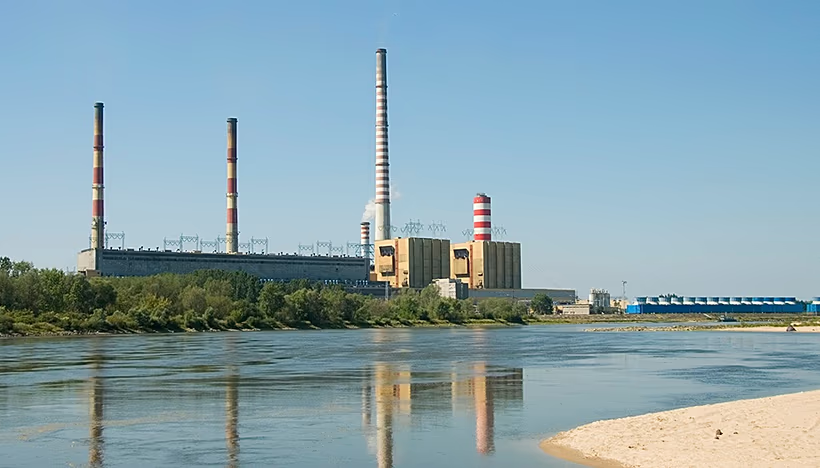
Poland has been forced to reduce output on its coal-fired power plants following critically low water levels in the Vistula River.
Poland has been urged to double down on clean energy after Europe’s drought wreaked havoc on its coal industry.
The move is said to have removed 1.3 GW from Poland’s power system, enough to power more than one million average households. This is around two per cent of the country’s current energy capacity.
River flow near the Kozienice Power Plant fell to just 135 cubic metres per second on 5 August, reflecting severe drought conditions.
Despite growing evidence that the plant is killing millions of fish larvae, including from six protected species, Enea is cracking on with plans to build a near 1.3GW gas-fired power plant at the Kozienice site. Experts warn that such a move will increase pressure on the Vistula River ecosystem through continued high cooling water demand.
‘The paradox of the climate crisis’
“This is the paradox of the climate crisis: power plants driving climate change are increasingly becoming its victims,” says Paweł Pomian, Vice-President of Polish environmental organisation EKO-UNIA.
“As the Vistula River dries up, an energy system built around large thermal power plants loses its resilience. Kozienice isn’t unique. There are many plants with similar cooling systems across Poland and there will be more if the government continues to expand fossil gas.”
Pomian argues that Europe’s latest drought should be a “wake-up call” for Poland and the rest of the continent to transition towards technologies like solar and wind power that require the least amount of water to generate electricity.
Poland urged to ditch coal
Despite witnessing some of the most rapid growth in solar power in Europe – adding more than 20 GW of solar capacity between 2020 and 2025 – Poland’s combined share of wind and solar remains five per cent lower than the EU average.
According to energy think tank Ember, Poland relies on coal for more than half (51 per cent) of its electricity – while wind and solar only make 25 per cent of the mix.