


With decades of mining experience, Nederman MikroPul is increasingly solving complex dust and emissions challenges in the industry.
Few companies have more experience with advanced dust and emissions control than Nederman MikroPul.
With more than 50 years of supplying solutions to Australia’s mining industry, its engineering expertise is now trusted by some of the country’s largest mining companies.
The company’s engineering-led approach has built long-standing relationships with Tier 1 miners by delivering reliable dust control solutions with a low total cost of ownership, Nederman MikroPul national manager – engineered solutions Paul Purchase said.
Part of the global Nederman Group, Nederman MikroPul combines international capability with local expertise to develop solutions for most dust and emissions control applications, including wet scrubber systems.
“We get a lot of business from blue-chip companies across mining, industrial and agriculture,” Purchase said.
“These companies want solutions they trust will work, something that provides reliability and dependability.”
The company has seen an upturn in mining activity over the past two years, with a diverse range of projects driving demand.
“I think mining has come out of a bit of a trough in the past year or two. You’re seeing the commodity prices starting to rise; gold and silver have raced ahead. We’re doing a lot of gold projects here in Australia, but also overseas in places like Africa,” Purchase said.
“Along with the gold projects, we’ve seen more nickel, tin and zinc, and now the rare earths projects are becoming more evident in the mix.”
Supporting such a broad range of commodities has seen Nederman MikroPul work closely with major engineering, procurement and construction (EPC) contractors and original equipment manufacturers (OEMs) to deliver highly customised dust and emissions control systems.
Purchase said many of the rare earths and other critical minerals projects the company is supporting are relatively small but technically complex, presenting unique engineering challenges.
“We’re dealing with thermal processes that use a lot of acids and other chemicals to extract the minerals,” he said.
“The gases that contain the dust are hot. They’re very corrosive and abrasive. It’s a new set of factors that can make it a lot more complex for the equipment to handle.”
Mining operations are also looking to future-proof their processing plants, designing emissions control systems capable of meeting tighter environmental standards over decades of operation.
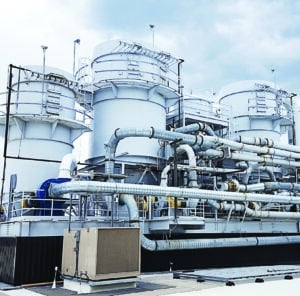
These applications typically require multi-stage cleaning systems using specialised materials and technologies rather than conventional dust collectors. Nederman MikroPul’s wet scrubbers and gas absorbers are engineered to provide high-efficiency control of particulate and gaseous emissions, achieving collection efficiencies of more than 99 per cent across mining and minerals processing operations.
“The multi-stage systems we provide are smaller because of these acids in the gases, which can mean the materials of construction are more expensive,” Purchase said.
“We are also probably one of the only suppliers in Australia that can supply wet scrubbers and scrubbing technology.”
Gold processing presents some of the company’s most demanding applications, where emissions control systems must handle highly corrosive process streams while meeting strict environmental performance requirements.
“We make specialised hybrid units for wet scrubbing. In the gold industry, sometimes they use these autoclaves where they pressurise it and boil it up with acid. But what’s coming off there is high-pressure, acidic steam. We’re building a couple of units at the moment that take that high-pressure steam, depressurise it and remove all the slurry that’s mixed in,” Purchase said.
“It’s a very specialised, custom-designed type unit. And it has to be very efficient because of the arsenic levels in gold processing.”
Purchase said flexibility and adaptability were just as important as technical capability when delivering successful outcomes for mining customers.
“We can do turnkey, we can do full installs, full builds,” he said. “We’ve got internal engineers and technicians who commission the equipment. We’ve got an aftermarket department that can do spare parts servicing and equipment service contracts.
“We’re a sophisticated engineering firm backed by a full-service business model.”