


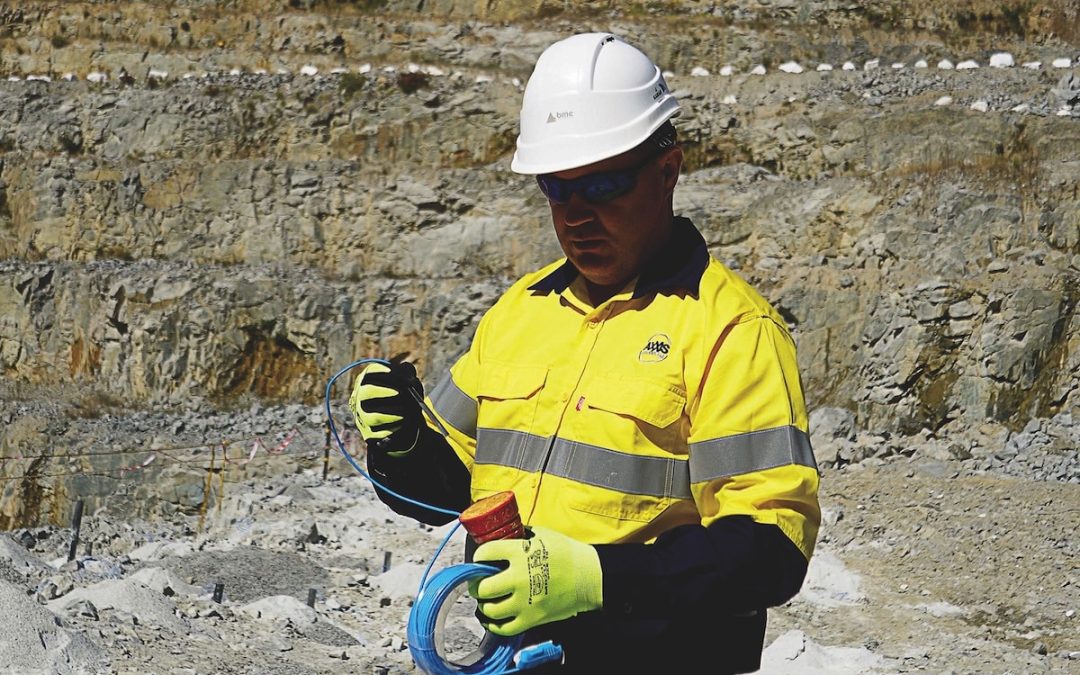
BME Mining is reshaping drill and blast practices across the Australian mining industry.
The process of blasting in today’s mining industry is increasingly being judged not just on power but in terms of how precisely and safely it can be executed. With greater capability comes greater responsibility, and this heightened focus is redefining the role of explosives providers in the mining value chain.
As a trusted supplier of fully integrated blasting services, products and technology, BME understands how to operate in this space.
To meet Australia’s strict regulatory and safety expectations, BME Australia general manager Dr Rakhi Pathak said the company is focused on positioning itself as a genuine partner to the sector.
“Our focus is on establishing BME Mining in Australia and Asia as a trusted, scalable and technology-driven explosives partner delivering safe, reliable and value-driven blasting solutions to the mining industry,”
“Our approach is driven by smart technologies and continuous innovation to deliver better outcomes for our customers.”
That emphasis on innovation is now visible in Western Australia, where BME has commissioned an electronic detonator manufacturing facility in Kalgoorlie.
The plant marks a significant step toward localising advanced blasting technology, with capacity to produce up to one million electronic detonators per year. It is the first facility of its kind in the region and has been strategically located in the heart of the nation’s mining sector.
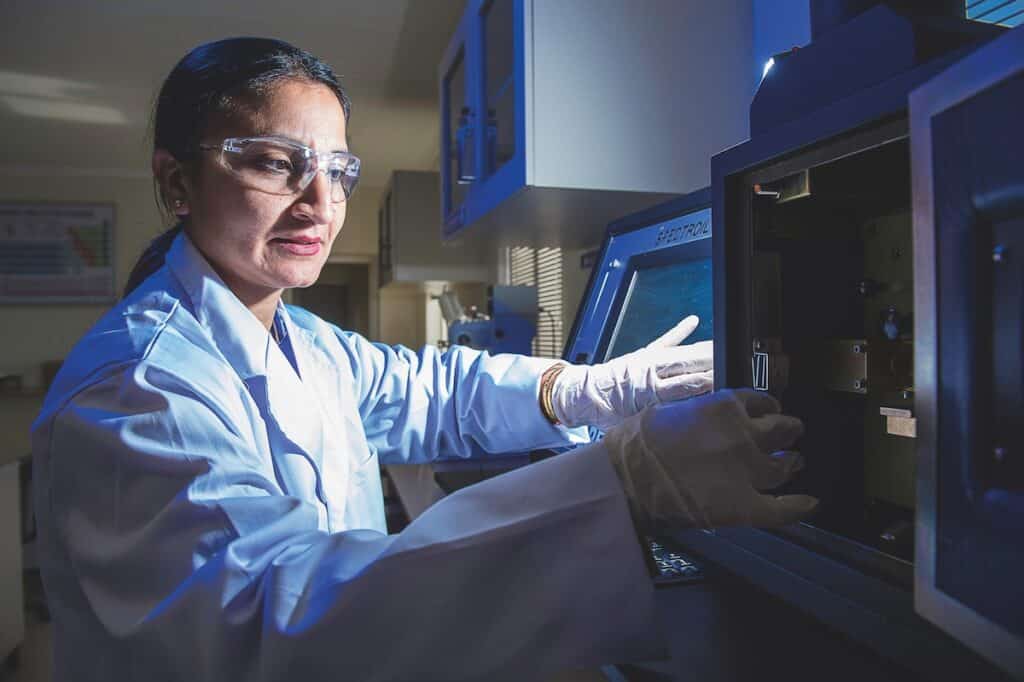
“Western Australia is a strategic location due to its large mining sector,” Pathak said. “Local manufacturing of AXXIS® electronic detonators is a significant milestone for supply chain security, driving unit cost efficiency while building in-country capability.”
The AXXIS platform has already been validated through successful testing at a regional gold operation, signalling its readiness for broader deployment.
With operational priorities being reshaped, the industry is moving towards technologies that can deliver repeatable, controlled outcomes with less variability. Against that backdrop, electronic initiation systems such as BME’s AXXIS platform are gaining traction.
Precise timing control sits as the centre of the system, which BME said directly boosts safety and performance.
“Precise timing significantly reduces the risk of misfires and unexpected blast outcomes,” Pathak said.
That precision also carries through to downstream efficiency. More accurate timing allows blasts to perform closer to design intent, improving energy distribution and material movement through the rock mass.
In practical terms, this translates to more consistent fragmentation, improved muck pile profiles and fewer oversize materials at the face. Reduced secondary blasting and rehandling ultimately improves productivity across the operation.
AXXIS Titanium electronic delay detonators are designed for demanding mining environments, incorporating multiple safety and reliability features. A dual-capacitor system separates communication and testing functions from firing energy, while non-volatile memory is designed to ensure permanent programming and full traceability.
Robust, damage-resistant lead wires further reduce the risk of cut-offs or misfires in complex loading conditions, supporting consistent performance in large-scale blasts.
Beyond the hardware, data is becoming just as important as timing in modern blasting practices. Electronic systems generate detailed, verifiable records for each blast, allowing teams to confirm execution accuracy, analyse outcomes and refine future designs.
“Together, timing accuracy and data enable a closed-loop improvement process, delivering consistent and repeatable results,” Pathak said.
Digital modelling is reinforcing that shift. Engineers can simulate and refine blast designs before execution, identifying risks and optimising outcomes in advance. When combined with electronic initiation, these tools allow tighter alignment between blast design, mine planning and downstream performance such as crusher throughput and mill efficiency.
Operations adopting systems like AXXIS are already reporting tangible gains, including improved safety outcomes, better fragmentation, fewer misfires and faster turnaround times at the face.
In some cases, blasts can be completed in less than two minutes, regardless of scale.
But Pathak is clear that results are not one-size-fits-all.
“The underlying benefits are broadly transferable, but the magnitude depends on geology, scale, mining method and operating constraints,” she said.
“This is why technologies like AXXIS deliver the greatest value when paired with site‑specific blast design, local technical support, and a partnership approach.”
Drawn to solutions that offer greater flexibility and ease of use, Pathak is optimistic about what lies ahead.
In her view, electronic initiation and digital blasting will increasingly shape how Australian mines operate.
“Electronic initiation systems such as AXXI® enable miners to move toward high-confidence execution, where blast outcomes are predictable, verifiable and repeatable,” Pathak said.
“Overall, these technologies help make mining safer, more productive, more cost-efficient and more sustainable, supporting Australia’s role as a global leader in responsible mining.”