


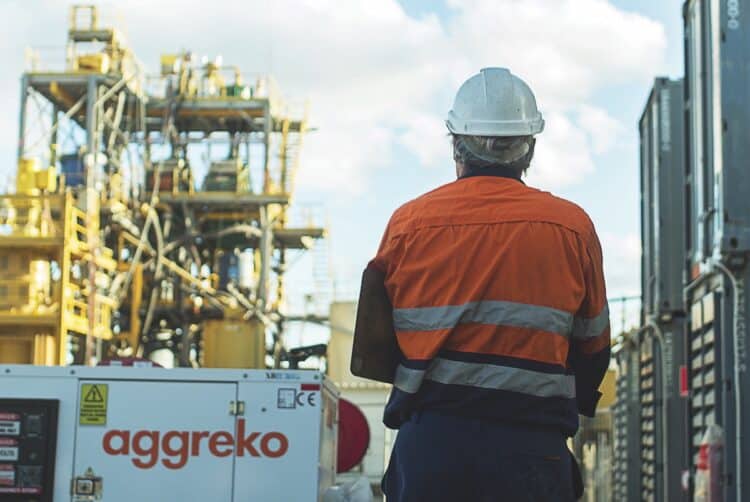
Aggreko is providing hybrid systems, alternative fuels and data-led solutions to improve energy resilience.
Fluctuations in regional fuel pricing have reinforced how quickly external market forces translate into on-site operational risk, particularly for remote mining operations reliant on diesel generation.
Transport costs, constrained supply chains and unpredictable pricing cycles are placing pressure on budgets, forcing sites to reconsider how energy is sourced, consumed and managed.
In response, Aggreko is positioning itself as a strategic energy partner, helping mining operators move beyond reactive fuel management toward more resilient energy systems.
“When global energy markets face disruption, the effects ripple through Australia–Pacific’s interconnected economies rapidly,” Aggreko head of mining for Asia-Pacific Jacques Nel said.
“We’re seeing supply constraints, transport costs climbing, pressures on production and challenges in planning as businesses struggle with unpredictable energy costs.”
A key part of this shift is the growing adoption of alternative fuels such as hydrotreated vegetable oil (HVO) and biofuels. These drop-in fuels, Nel said, can make a real difference to operating conditions, as they can be used in existing Aggreko generator fleet without modification.
This enables immediate reductions in emissions while maintaining overall operational continuity.
“The beauty of drop-in fuels? You keep operating exactly how you do today – just with better fuel” Nel said. “Your generators run the same. Your maintenance schedules stay the same. Your teams work the same way.
“HVO delivers a significant reduction in lifecycle carbon dioxide emissions whilst working seamlessly with existing generators and infrastructure. No operational disruption, just cleaner and more sustainable power.”
However, fuel substitution alone is not enough to address wider energy pressures. Operators are increasingly combining alternative fuels with hybrid energy systems that integrate battery energy storage systems (BESS) alongside conventional generation.
The Asia–Pacific BESS market is forecast to grow from $US28.61 billion ($39.4 billion) in 2025 to $US62.45 billion ($86 billion) by 2030, according to Aggreko, reflecting strong uptake across industrial sectors.
In mining applications, BESS enables energy to be stored during low-demand periods and deployed during peak loads, reducing generator runtime, improving efficiency and stabilising power delivery in remote environments.
Where Aggreko differentiates is in how these technologies are integrated and managed as a single energy solution. Rather than supplying standalone equipment, the company designs and operates end-to-end power systems tailored to site conditions, combining generation, storage and fuel strategy with optimisation.
Data plays a central role in this model. Through Aggreko Remote Monitoring (ARM), operators gain real-time visibility over fuel consumption, asset performance and system efficiency.
“You can’t manage what you don’t measure,” Nel said. “That’s why telemetry data monitoring and fuel management services are becoming essential tools for businesses serious about controlling their energy costs.”

By analysing performance data from thousands of global assets, ARM provides deep insights into operational patterns. This intelligence enables Aggreko to precisely tailor solutions, enhance efficiency and maximise equipment uptime. This level of visibility is becoming essential for controlling expenditure and improving environmental, social and governance (ESG) outcomes.
These solutions are also increasingly aligned with regulatory and sustainability pressures., Emissions standards across the Asia–Pacific region are tightening and incentives for lower-carbon energy adoption are expanding, creating the dual challenge of lowering operating costs while also demonstrating measurable emissions reduction.
Aggreko’s approach is designed to address both objectives. By combining alternative fuels, hybrid systems and data-led optimisation, operators can reduce diesel consumption, lower emissions intensity and improve resilience against fuel price volatility.
The company’s model focuses on site-specific design and continuous optimisation, ensuring energy solutions are tailored to operational realities rather than standard configurations.
This includes evaluating where hybrid systems deliver the greatest benefit, assessing the suitability of alternative fuels for specific logistics environments, and continuously refining system performance once deployed.
“Here’s the win–win: the same solutions that reduce your exposure to fuel price volatility also help you meet sustainability targets and government regulations around emissions,” Nel said.
By working with partners like Aggreko, sites can not only manage immediate fuel risk but also build long-term operational resilience through more efficient, lower-emissions and cost-stable energy systems.