


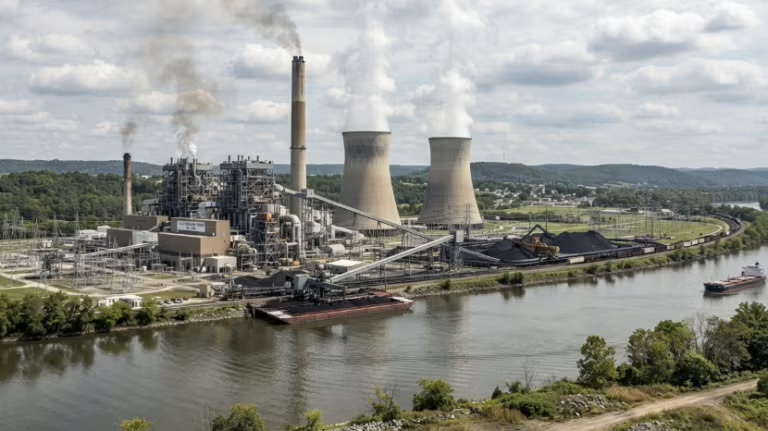
Load growth has an overlooked answer: reinvesting in the coal sites being retired. Data centers, manufacturing, and electrification are pushing load growth faster than new generation and transmission can keep up. Even as that demand delays some coal retirements, the fleet keeps aging and units keep closing.
After 18 years at the U.S. Department of Energy, including as deputy director of its interagency working group on coal and power plant communities and economic revitalization, I would argue these sites are among the most valuable assets we have to address rising demand.
COMMENTARY
The U.S. Energy Information Administration’s 2025 generator data show more than 630 coal units have retired since 2000, 329 of which had a nameplate capacity of 100 MW or more. Another 467 units (183 GW of nameplate capacity) still operate, many aging toward retirement. Reusing them is not new; from 2011 to 2019, more than 100 coal plants were converted to or replaced by gas. What is new is the premium on speed.
A coal plant comes with existing interconnection, transmission, water, industrial land, transportation access, and a trained workforce. New transmission can take a decade, and a retiring generator’s interconnection rights can often transfer to a replacement resource. Time saved varies by grid operator. Lawrence Berkeley National Laboratory’s analysis finds the wait from request to operation has doubled to more than four years, and swings widely by grid operator. With buyers contracting for power now, that speed is essential.

Reuse also drives affordability. With the transmission and switchyard in place, a developer avoids building and paying for them. Equipment can carry over too; many gas conversions retrofit the boiler and reuse the steam turbines, and a 2022 study found reusing a coal plant’s infrastructure could cut a new nuclear plant’s capital cost 15% to 35% versus greenfield.
In DeSoto Parish, Louisiana, D.E. Shaw Renewable Investments swapped the interconnection rights from the retired Dolet Hills coal plant to a new 240-MW solar-and-storage project, winning approval in roughly 18 months. Gas, solar-and-storage, or nuclear all reach the grid faster when the connection already exists.
The advantage is not automatic. On-site coal waste can be costly to remediate, and interconnection rights must transfer within a tight window—usually about a year. But synchronizing the new project with the retirement lets it rehire the incumbent crew as it staffs up.
A coal plant is often the largest local taxpayer, and when it closes, the tax base and payroll can go with it. Reuse can restore much of that. Beaver County, Pennsylvania, wrote data center siting guidelines and uses them to steer investment rather than absorb it. When a developer arrived expecting a red carpet for a project that did not fit, the county’s answer was telling: we will not stand in your way on private land, but you will not get our strategic support either. That is leverage, with a community negotiating not just to replace what it had, but to fund the future it wants. Rebuilding in an established energy community may also sidestep much of the permitting and local opposition that greenfield projects increasingly face.
The pathways are proving out, and no two are alike. In Becker, Minnesota, Xcel Energy is turning the retiring Sherco coal plant into a clean-energy hub anchored by a large solar complex with 710 MW online today, on its way to 910 MW by 2029, while reusing the site’s infrastructure and workforce. In Pennsylvania, the retired Bruce Mansfield plant is being repowered with gas to put 2,550 MW onto the PJM grid, reusing the existing transmission and water access, and refurbishing the coal boiler and steam turbines.