


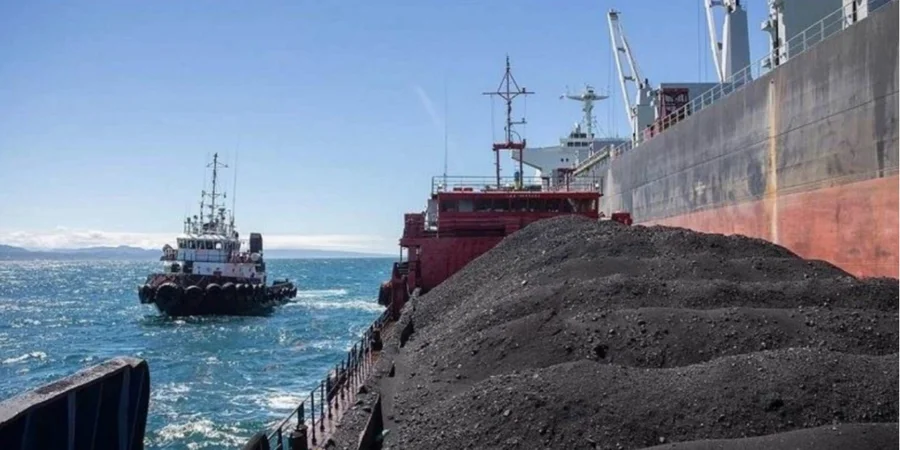
Russian exports of coking coal to Turkiye fell 30% in the first seven months of 2026, and in July shipments stopped entirely, business outlet Kommersant’s reported on Sept. 16, as mounting problems with Black Sea shipping continue to hit Russian trade.
Russian exporters reduced coking coal supplies to Turkiye by about one-third from the start of the year.
Analysts cited by the outlet linked the decline to more difficult shipping conditions in the Black Sea, the limited size of the Turkish market, and exporters’ preference for redirecting cargo to the Far East, where prices are higher.
Russia is Turkiye’s third-largest supplier of coking coal after the United States and Australia. Its share of total Turkish imports is about 7%, but Moscow now risks losing even that portion of the market.
In July 2026, Turkiye did not buy any Russian coking coal at all. By comparison, Russia exported 54,500 tons to Turkiye in June and 30,900 tons in July 2025.
In July, Turkiye bought coking coal from Britain for the first time in 2026, importing 82,500 tons, and also purchased 48,800 tons from Kazakhstan.
U.S. exports to Turkiye rose 70% in the first seven months of 2026 to 1.88 million tons, and in July alone they tripled year over year to 469,000 tons. Australian supplies fell 38% in the January-July period to 770,000 tons. Russia supplied 224,500 tons.
Russian analytical company NEFT Research said the effective halt in shipping between Russian ports and Turkiye in the Black Sea has become one of the main reasons for the drop in Russian metallurgical coal exports to the Turkish market.
At the same time, the report noted that the high cost of rerouting coal through Baltic ports makes that option unprofitable.
Ukraine’s Unmanned Systems Forces have now been carrying out Operation MoLoCHKa for 10 weeks, aimed at disrupting Russian logistics in the Black and Azov seas. According to previous reports, Ukrainian forces hit 215 vessels in July, 54 in August, and 16 more between Sept. 1 and Sept. 11.